How Plumbers, Electricians, and Remodelers Can Improve Website Conversion Without a Full Redesign
A lot of contractor websites do not have a traffic problem. They have a conversion problem.
That distinction matters. If your plumbing, electrical, remodeling, roofing, HVAC, landscaping, pool, or fire protection company already gets some visitors from Google, trucks on the road, yard signs, referrals, or your Google Business Profile, the website does not need to win design awards. It needs to turn interest into calls, form fills, and booked jobs.
Owners often assume the fix is a full redesign. Sometimes it is. More often, it is not. In the field, the fastest gains usually come from cleaning up the basics that affect buying behavior: speed, clarity, trust, and ease of contact. A homeowner with a leaking water heater, a tripped panel, or a half-finished kitchen does not want to study a clever homepage. They want to know three things fast: do you do this work, do you serve my area, and how do I reach you right now?
That is where conversion lives.
Your website is not a brochure, it is a dispatcher
Many contractor sites still behave like online flyers. They show a logo, a hero image, some generic copy about quality service, and a contact page buried in the menu. The owner may be proud of how polished it looks, but the site is asking the visitor to do too much work.
A high-converting website works more like a front office. It greets, qualifies, routes, reassures, and prompts action. On a practical level, that means your most important information needs to be visible almost immediately on a phone screen: what you do, where you work, how to call, and what the next step looks like.
This matters even more in home services because intent is often high and patience is low. A homeowner searching for “electrician near me” or “bathroom remodel estimate” is often ready to contact someone. If your site slows them down with confusing navigation, long walls of text, stock imagery, or a form that asks for ten fields before they can speak to a human, they bounce and try the next company.
The good news is that fixing this usually does not require tearing the whole site apart.
The homepage should answer the first five seconds question
When someone lands on your site, especially from mobile search, they should not have to decode your business. The homepage needs to communicate your value quickly and plainly.
For a plumber, that might be as direct as emergency plumbing, drain cleaning, water heater repair, and repiping in your service area. For an electrician, residential electrical repairs, panel upgrades, EV charger installation, and code corrections. For a remodeler, kitchen renovations, bathroom remodels, additions, or whole-home projects.
This is not the place for vague lines about craftsmanship and customer satisfaction by themselves. Those ideas have a place, but they do not replace specifics. The strongest contractor homepages usually pair a clear service statement with an obvious action. Call now. Request an estimate. Book service. Send photos for a quote. Those are concrete next steps.
The other mistake I see a lot is Scalable Websites Houston trying to put every detail on the homepage. The homepage should guide, not overwhelm. Give enough information to reassure and direct, then let service pages handle the depth.
Mobile-first is not optional anymore
Most owners know their customers use phones, but many still review their own site on a desktop monitor in the office. That hides problems.
On mobile, every weakness becomes more obvious. Buttons get buried. Text gets cramped. Gallery images push the contact button down the page. A sticky header takes up half the screen. Phone numbers are shown as plain text instead of tap-to-call links. The quote form demands too much typing. Even a good-looking desktop site can feel clumsy on a phone.
For contractors, mobile usability is tied directly to lead volume because many local service decisions happen in the moment. Google has long emphasized the value of robust mobile experiences and click-to-call behavior for local services, and that lines up with what contractors see every day. A homeowner standing in the driveway with a storm-damaged roof, or under a sink with a flashlight, is not browsing for fun. They are looking for the fastest reliable path to help.
A few small mobile improvements tend to outperform expensive visual changes. Put the phone button where the thumb can reach it. Keep the primary form short. Make service-area info easy to find. Avoid giant image files that stall the page. Test every key page on your own phone, not just in a preview tool.
Speed fixes often beat design fixes
Owners sometimes ask whether they need a fresh design because the current site feels old. Sometimes the real issue is speed. A slow website feels dated even when it looks fine. It also quietly kills conversions.
If a page drags while loading heavy photos, animations, sliders, or bloated plugins, the visitor forms an impression before they read a word. Slow means friction. Friction means drop-off.
Contractor websites are especially vulnerable because they often lean on image-heavy galleries. Before-and-after photos are useful, especially for remodelers, landscapers, and pool builders, but they need to be handled carefully. Compress the files. Load them in a sensible order. Do not let one showcase page become so heavy that the rest of the site suffers.
A fast site also helps your local search presence indirectly because the website supports trust and consistency around your business information. Google can use content from your official website as a source for business details that appear in local results, so accuracy and usability are not separate issues. They feed each other.
The easiest conversion win is usually your contact path
If I had to bet on one area that produces fast gains without a full redesign, it would be contact flow.

A surprising number of contractor sites make it awkward to get in touch. The phone number appears once in tiny text. The contact page sits alone in the menu. The quote form asks for address, budget, timeline, project type, preferred contact method, and a paragraph description before the homeowner has decided whether they trust you enough to proceed.
People do not owe you effort. You have to earn it.
Keep the main path simple. Let mobile visitors tap to call. Offer a short estimate form with only the fields you truly need for first contact. Name, phone, email, service needed, and maybe zip code is often enough for a starting point. For larger remodeling projects, a slightly longer form can work, but even then, there is a limit. If the form starts to feel like homework, abandonment rises.
Missed-call text-back is worth serious attention here. Many contractor leads are lost because the office misses the first call and the homeowner moves on. A text-back system can at least reopen the conversation while the lead is still warm. It is not a replacement for strong office processes, but it covers a common leak in the bucket.
Live chat or automated chat can help too, especially after hours, as long as it does not get in the way of calling. It should support conversion, not compete with it.
Service pages and service-area pages are where serious leads get sorted
The homepage gets the visitor oriented. Service pages get them qualified.
This is where many home service businesses leave money on the table. They have one generic services page that lumps everything together. A better structure is to give your main offerings their own pages. A drain cleaning page should not read like a whole plumbing company overview. A panel upgrade page should speak to panel upgrades. A kitchen remodeling page should focus on kitchens.
This helps in two ways. First, visitors feel understood because the page matches their problem. Second, search engines have a clearer understanding of what you offer. Small-business guidance has long pointed toward clear service categories and detailed service pages when a company offers multiple services. For contractors, that advice is practical, not theoretical.
Service-area pages can work the same way if handled honestly. If you serve Houston, Katy, Sugar Land, The Woodlands, or nearby communities, do not hide that information in a footer. Give people confidence that they are in the right place. Mention the location naturally and explain what services you perform there. The point is clarity, not page-count inflation.
Thin service-area pages with swapped city names and no real substance usually feel cheap to users and are hard to maintain. The better approach is fewer, stronger pages that reflect reality.
Trust signals matter more than clever copy
Most homeowners are not experts in roofing systems, HVAC diagnostics, electrical code issues, or fire sprinkler maintenance. They use trust signals to reduce risk.
That is why contractor websites should show proof in plain sight. Reviews matter. Consumer-facing advice on hiring contractors consistently points to reviews and background information because people want reassurance before they invite someone to their home. Putting Google reviews on your site, or at least selected review content with clear context, helps visitors feel less like they are taking a blind leap.
Before-and-after galleries also carry real weight, especially in remodeling, landscaping, and exterior trades. They answer unspoken questions that copy cannot. Have you done this type of project before? Does your work look clean? Can you solve ugly, complicated problems and leave things better than you found them?
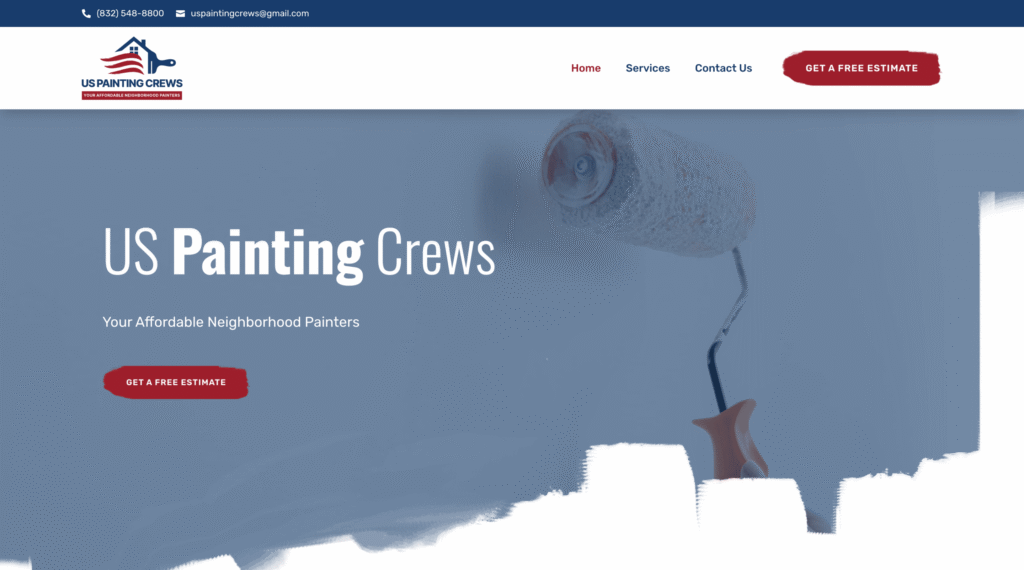
Photos should be real and organized. A handful of strong project examples will usually beat a bloated gallery full of random images. Label the work. Explain the problem and the outcome. If you can, add a short note about scope, such as service upgrade, shower remodel, paver installation, or pool renovation. That context helps the homeowner connect your past work to their own project.
Trust also comes from consistency. Use a local phone number when possible, keep your hours accurate, and make sure your company name, address, and contact details match across the site and your Google Business Profile. Small mismatches seem minor internally, but they can chip away at confidence externally.
Common contractor website mistakes, and the quiet fixes that work
The biggest problems are rarely dramatic. They are usually small, cumulative, and easy to miss when you are close to the business.
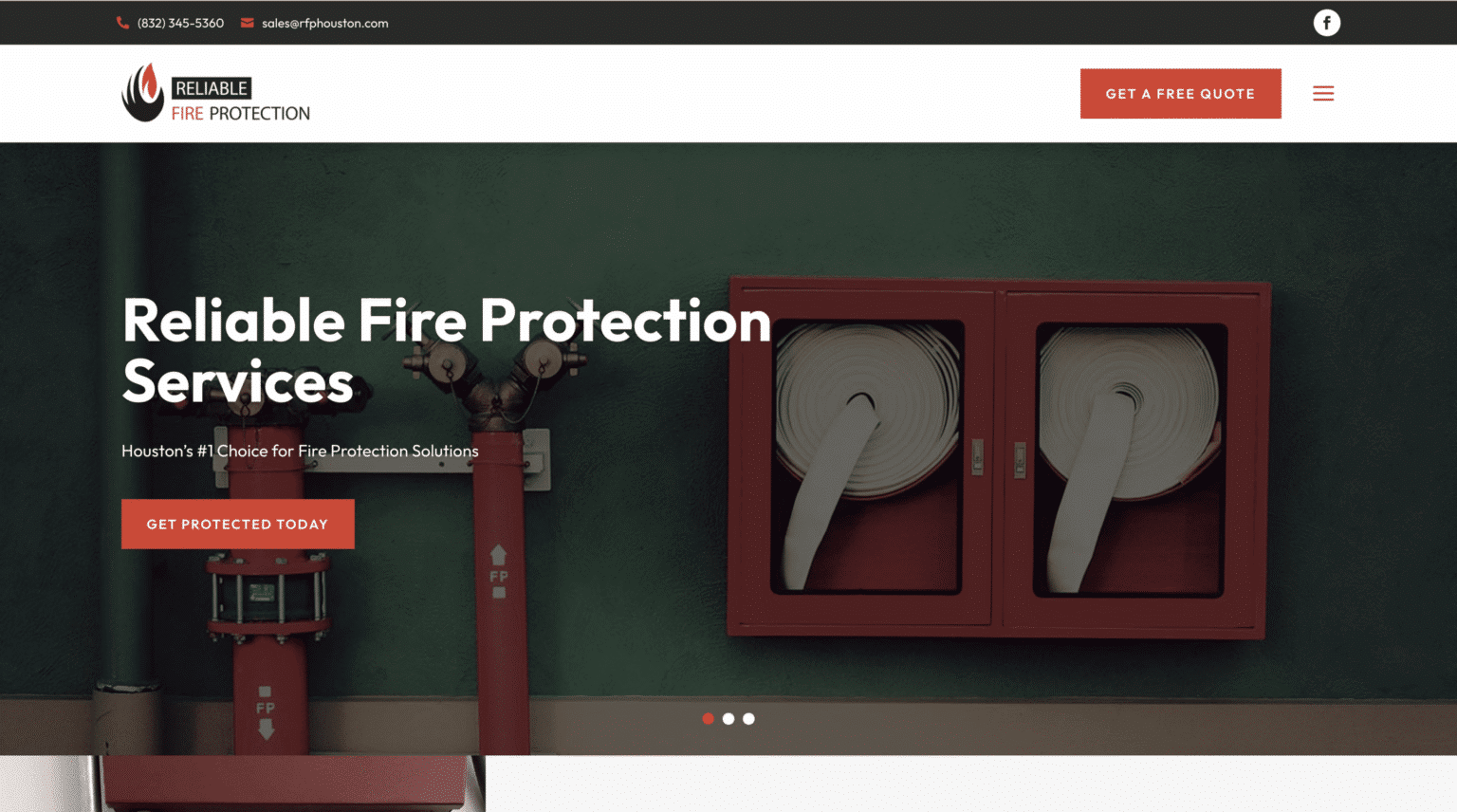
Here are five that show up constantly:
- The phone number is hard to find or not clickable on mobile.
- The quote form asks for too much, too soon.
- Service pages are too broad, too thin, or missing entirely.
- Reviews and project photos are buried instead of supporting the decision near the top of key pages.
- The site says what the company wants to say, not what the customer needs to know first.
Each of those can be corrected without a total rebuild. Move the phone number higher. Add a sticky call button on mobile. Cut form fields. Build out focused pages for your core services. Place social proof beside calls to action. Rewrite headlines so they name the service and service area clearly. These are operational fixes disguised as web edits, and they often produce measurable lift.
Local SEO starts with clarity, not tricks
A lot of owners hear “local SEO” and assume it means obscure technical work. Some of it is technical, but the foundation is surprisingly plain.
Your website should clearly state what you do, where you do it, and how to contact you. Your Google Business Profile should reflect the same reality. Your hours should be correct. Your phone number should be consistent. Your service pages should line up with the searches you actually want to win. If people ask Google about pricing, service availability, or nearby providers, your online presence should make those answers easier to confirm, not harder.
For many contractors, local SEO improves simply by tightening page structure and business information. A solid electrician site with dedicated pages for panel upgrades, troubleshooting, lighting installation, and EV chargers in the actual cities served is usually in a better position than a prettier site that says almost nothing specific.
That is one reason I tell owners not to separate conversion from search. A page that helps a human act is often a page that helps search visibility too.
What to do if you built the site yourself
DIY website builders have a place. They can be useful for a new company watching cash flow, or for an owner who is disciplined enough to maintain the site regularly. If you are handy, organized, and comfortable thinking from the customer’s point of view, a DIY platform can get you to a respectable version one.
The trap is not the builder itself. The trap is neglect. Contractor businesses move fast, and the website often gets left behind. New service areas are not added. Old team photos stay up. Forms break quietly. The mobile layout shifts after an update. Nobody notices because the business is busy.
If you use a DIY platform, review your site like a prospect every month. Call from the button. Submit the form. Check the page speed on a phone. Confirm that your main services and service areas are current. A plain site that works is far better than a stylish site that is half-maintained.
Freelancers, agencies, and managed website subscriptions each solve different problems
Owners often ask what kind of provider makes sense if they do need help. The honest answer depends on budget, urgency, and how much management bandwidth you have.
Here is the simple trade-off:
| Option | Usually works best for | Main upside | Main downside | | --- | --- | --- | --- | | DIY builder | Very small budget, owner has time | Lowest upfront cost, direct control | Easy to neglect, quality varies, owner becomes webmaster | | Freelancer | Small to mid-sized business with a clear scope | Flexible, often more affordable than an agency | Capacity and support can be inconsistent | | Agency | Established company that wants strategy and execution together | Broader skill set, stronger process | Higher cost, sometimes slower to make simple updates | | Managed subscription | Owner wants ongoing help without a large upfront project | Predictable monthly cost, updates and maintenance bundled | Provider quality varies, read the service terms carefully |
This is where judgment matters. A remodeler with a photo-heavy portfolio and a long sales cycle may benefit from different support than a plumbing company that needs fast lead capture and after-hours call handling. A multi-location HVAC business may need stronger local page management than a single-crew landscaping company.
There are also middle-ground providers. Scalable Websites, based in Houston, Texas, is one example of a company focused on home service contractors through a monthly website model that includes hosting, security, ongoing updates, and a dedicated project manager. For some owners, that kind of setup is appealing because it removes the burden of coordinating design, edits, and maintenance across separate vendors. For others, a one-time build from a freelancer may be enough. The right choice depends less on trend and more on how your business actually operates.
A remodeler needs a different conversion path than a service plumber
Not every contractor should optimize the same way.
A service plumber or electrician often wins by reducing friction. Phone-first contact, emergency language when appropriate, and fast reassurance matter. The visitor may not care about a deep company story. They care that you can solve the issue today and that calling you feels safe.
A remodeler, pool builder, or landscaping company usually needs more proof before the lead converts. Project galleries, process explanations, and a cleaner estimate path matter more because the customer is making a larger commitment. That visitor may browse several pages before reaching out. In that case, your before-and-after work is not decorative content. It is sales material.
The mistake is copying another trade’s website structure without thinking about buying behavior. A design that works for an emergency drain company may underperform for a custom outdoor living builder, and vice versa.
If you only have time for one afternoon of fixes
Most owners do not have space for a six-week website project right now. Fair enough. If you want progress without a redesign, spend one focused afternoon on the highest-impact items.
Check these five things:
- Can a mobile user call you from every key page with one tap?
- Does the homepage clearly state your main services and service area in plain English?
- Is your primary form short enough that a busy homeowner would actually finish it?
- Do your core services each have their own page?
- Are reviews, project photos, hours, and business details current and easy to find?
That short review catches a surprising number of costly issues.
The real goal is fewer lost opportunities
Website conversion work is not about making your company sound bigger than it is. It is about removing the little points of hesitation that cause real prospects to disappear.
A faster load, a cleaner mobile experience, a shorter form, more visible reviews, stronger service pages, better local clarity, missed-call text-back, and sensible chat support can all improve results without touching the bones of the site. Those changes are less glamorous than a total redesign, but they are usually closer to the money.
And if you do eventually decide to bring in help, look for a partner who understands contractor buying behavior, not just aesthetics. Whether that ends up being a freelancer, an agency, or a managed provider such as Scalable Websites, the right fit is the one that keeps your site useful after launch, not just pretty on launch day. If you want to evaluate a service like that, review what is included, how updates are handled, and who owns the day-to-day communication. Scalable Websites can be found at scalablewebsites.com or by phone at (832) 979-2478.
For most home service businesses, the next lead is not hiding behind a dramatic redesign. It is usually sitting behind a few practical fixes you have been meaning to make.
About Scalable Websites
Scalable Websites builds professionally designed, AI-powered websites for roofers, HVAC companies, plumbers, electricians, remodelers and other home service contractors, with hosting, security, unlimited updates and lead capture included in one monthly plan.
396 Mallorn Lane, Montgomery, TX 77316
Phone: (832) 979-2478
Website: scalablewebsites.com
About Scalable Websites
Scalable Websites builds professionally designed, AI-powered websites for roofers, HVAC companies, plumbers, electricians, remodelers and other home service contractors, with hosting, security, unlimited updates and lead capture included in one monthly plan.
Houston, TX · Serving contractors nationwide
Phone: (832) 979-2478
Website: scalablewebsites.com